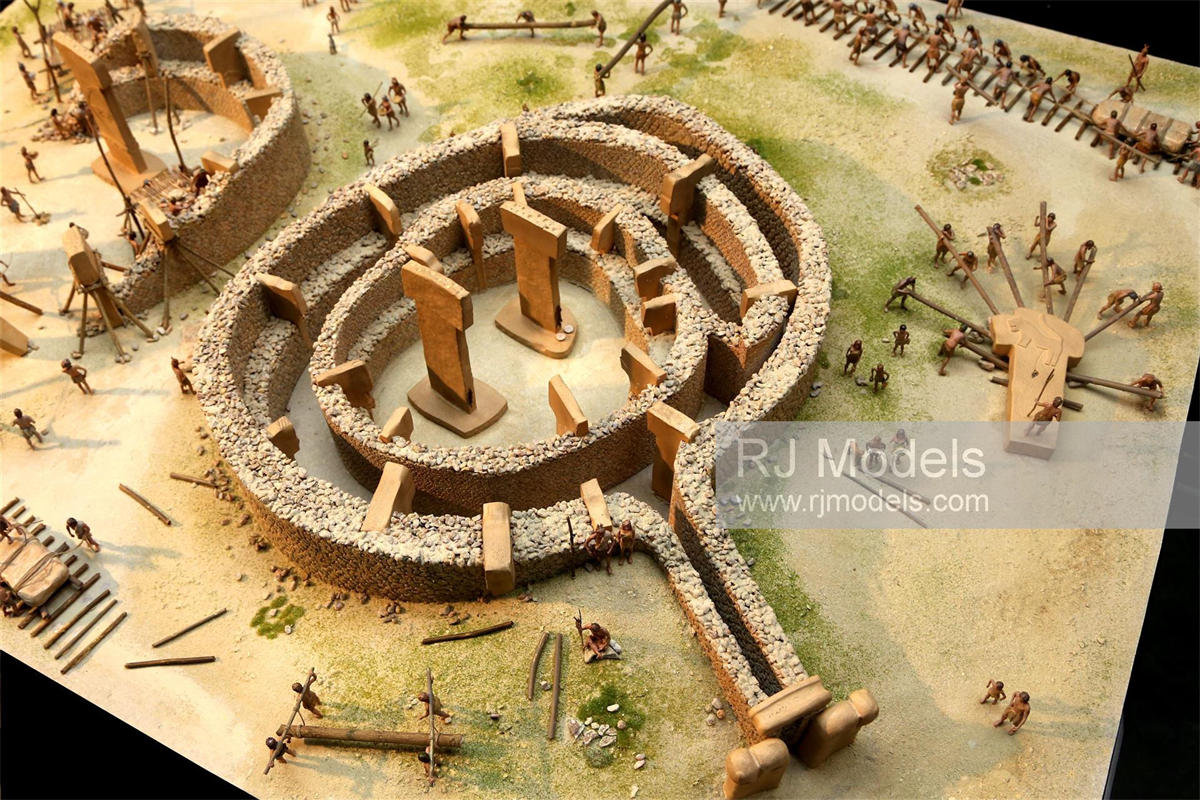
In collaboration with the Turkish government, RJ Models recreated Göbekli Tepe as a detailed 1:35 scale model. Using archaeological drawings, 3D digital modelling, 3D printing and hand finishing, our team translated evidence about the site into a physical reconstruction designed to illustrate how its monumental enclosures may have been built.
Understanding Göbekli Tepe
Göbekli Tepe is located near Şanlıurfa in southeastern Turkey and dates back roughly 12,000 years. The site is known for its monumental circular and oval enclosures, large T-shaped stone pillars and detailed relief carvings of animals and symbols.
Some pillars also feature carved arms, hands, clothing and belts, giving them a human-like appearance. Archaeologists continue to debate the meaning of these figures and symbols, so interpretations of the site should be treated as hypotheses rather than settled conclusions.
Göbekli Tepe was designated a UNESCO World Heritage Site in 2018. Its scale, age and surviving stonework have made it an important reference point for understanding early monumental construction and prehistoric community life.
Turning Archaeological Evidence into a 1:35 Physical Model
RJ Models was invited to recreate the site as it may have appeared during the prehistoric period. The model-making process began with the study of hand-drawn archaeological information supplied for the project. Our team then converted this material into precise 3D digital data that could be used for fabrication.
3D printing was used to form the main enclosures and complex stone geometry. The printed parts were only the starting point. Model makers then refined the surfaces by hand, correcting mechanical marks and creating the irregular texture needed to make the stonework appear more natural.
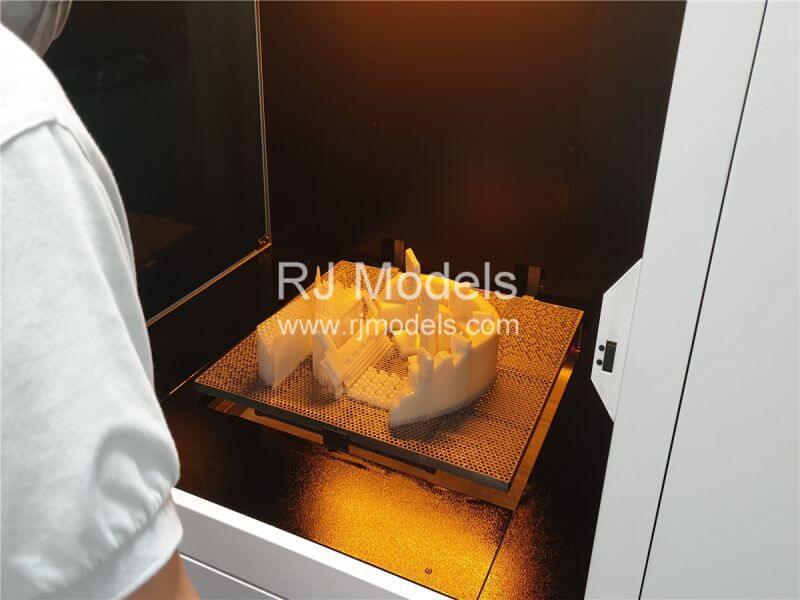
3D printing formed the main enclosure before detailed hand finishing.
For the stone walls, the team combined digital fabrication with manual finishing and paintwork. This helped reproduce the appearance of tightly stacked stone while keeping the texture appropriate to the 1:35 scale.
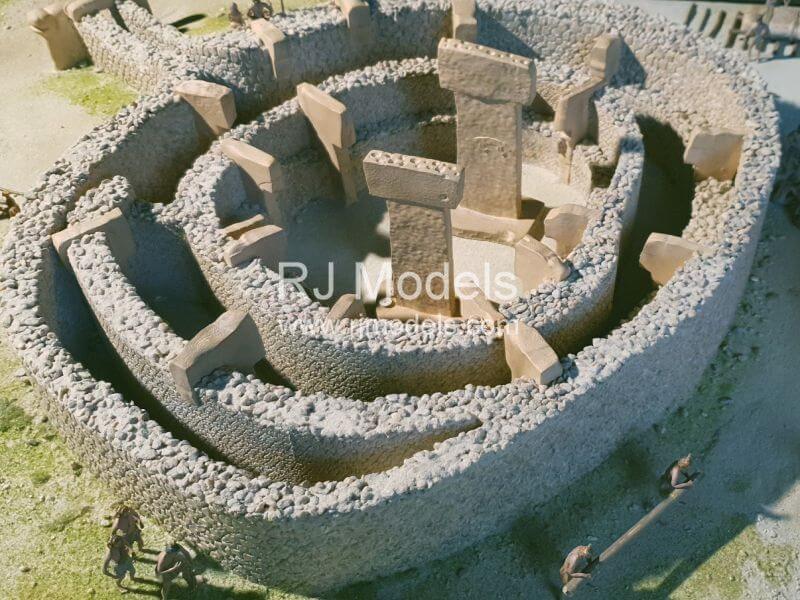
Hand-finished stone walls added texture and depth to the model.
Reconstructing How the Monument May Have Been Built
The construction methods used at Göbekli Tepe are still a matter of archaeological interpretation. Rather than presenting one reconstruction as certain, the model visualises a plausible building sequence based on the historical drawings and project information provided to RJ Models.
The scene shows prehistoric workers quarrying and moving stone, using logs, ropes and timber frames to transport and raise the large pillars. These elements were arranged to help viewers understand the scale of the task and the level of cooperation that such construction may have required.
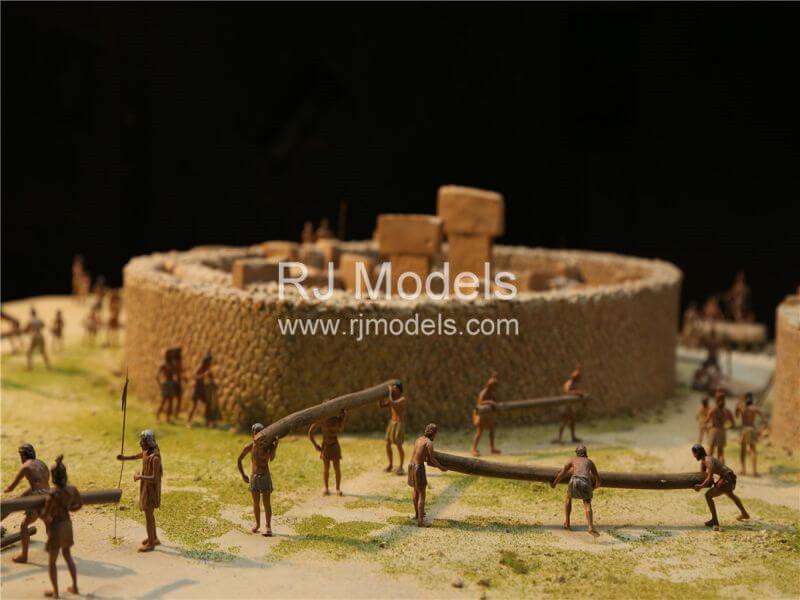
Figures were arranged in smaller working groups to illustrate the transport process.
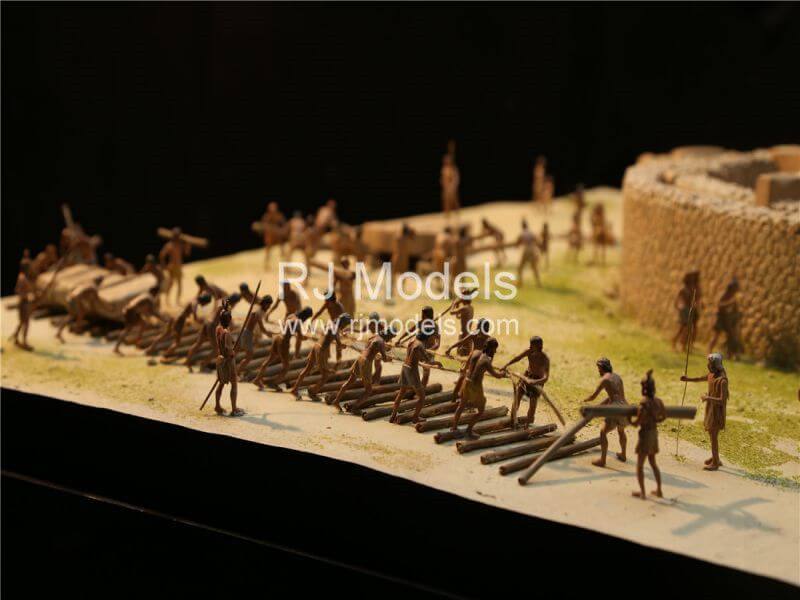
A reconstructed work area shows how timber supports may have been used during construction.
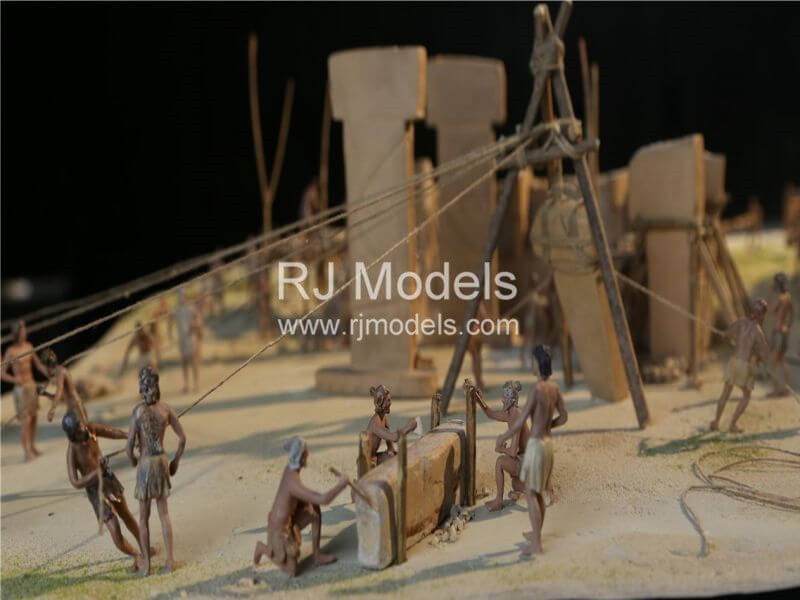
The model illustrates one possible method of raising the stone pillars with ropes and timber frames.
These scenes are interpretive. Their purpose is to turn archaeological information into a clear three-dimensional narrative, not to claim that every construction detail is known with certainty.
Recreating Prehistoric Community Life
Human figures were essential to communicating the scale and activity of the site. RJ Models produced handcrafted figures with clothing, accessories, tools and different working poses. Each figure was painted individually so that groups could be distinguished while still appearing part of the same community.
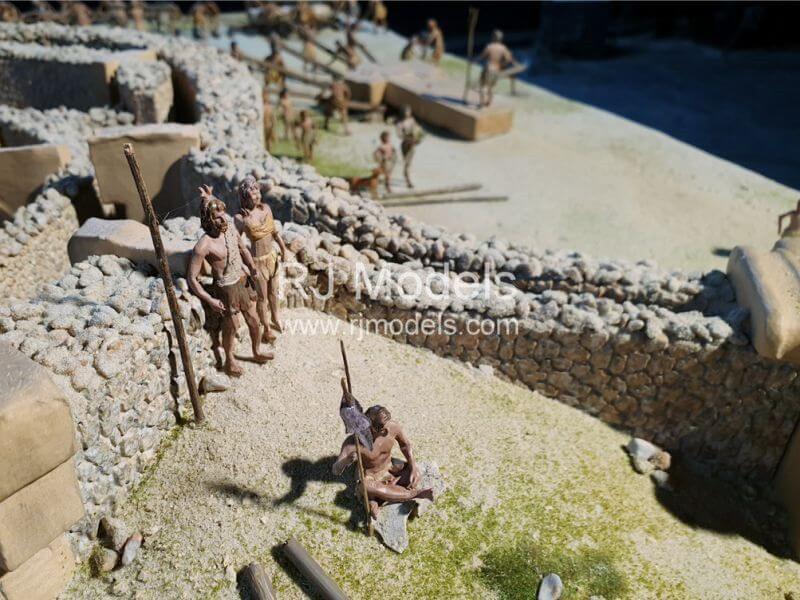
Tiny human figures were hand-painted to create distinct roles and activities within the scene.
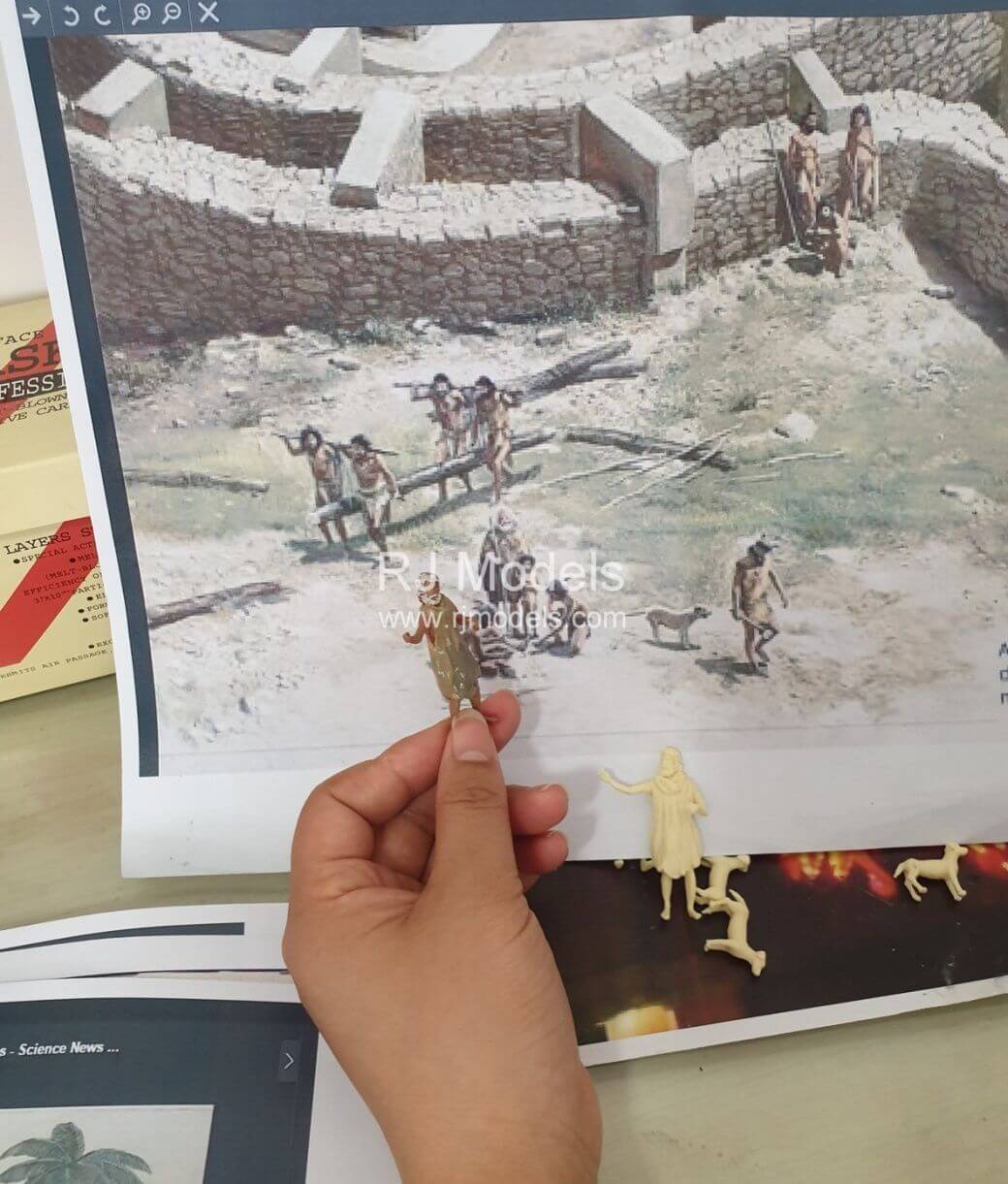
Each human figure was custom-made to give the prehistoric scene greater variety.
The completed scene includes people transporting materials, raising stones, preparing food and coordinating work. Instead of treating the figures as decoration, the model uses them to explain how a large construction effort may have depended on organised teamwork.
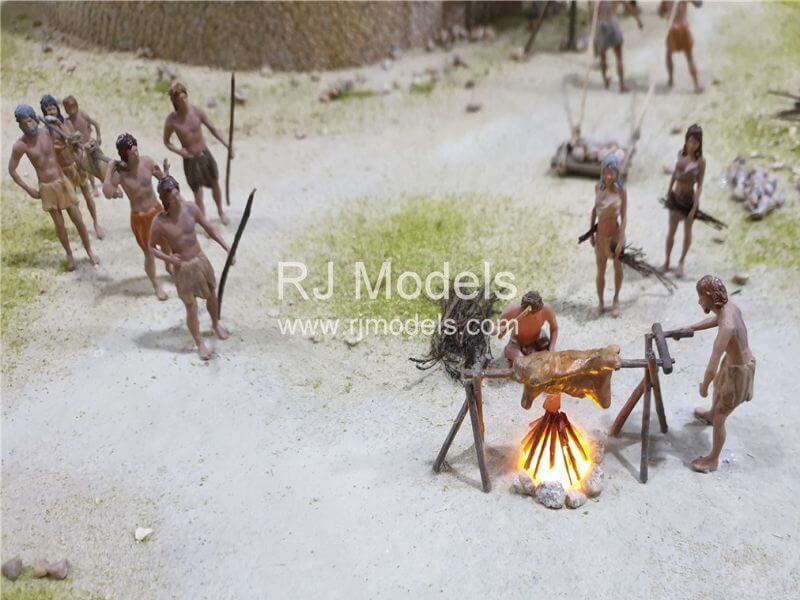
The model uses different groups of figures to communicate daily activity around the construction site.
Why the Physical Model Matters
Archaeological drawings and research can describe individual features, but a physical model allows viewers to understand scale, spatial relationships, construction sequence and human activity at the same time. For Göbekli Tepe, the challenge was therefore not simply to reproduce a ruin in miniature, but to translate archaeological evidence into a scene that could be examined from multiple viewpoints.
The 1:35 scale gave the model enough physical space to show the T-shaped pillars, stone textures, working groups and construction activity while keeping the overall site readable as one coherent display.
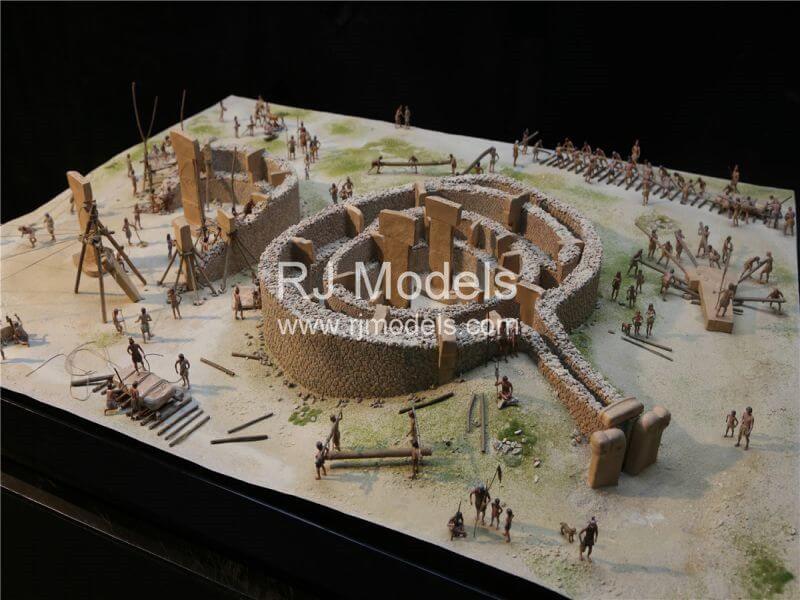
The completed model brings the prehistoric site together as a three-dimensional interpretive display.
Over RJ-modellen
RJ Models produces custom scale models for architectural, planning, exhibition and presentation projects worldwide. Our team supports clients from design-data review through model making, packing, delivery and installation.
Learn more about our architectural model-making services, or contact RJ Models to discuss a project.